
Mr. Oizo and Gaspard Augé
Rubber OST
Because Music
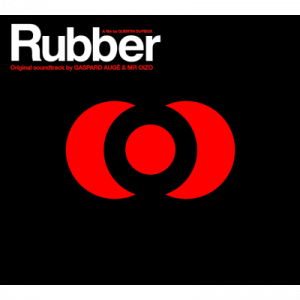 Quentin Dupieux, known to most as Monsieur Oizo, has done something I’m sure many of us wish we could. That is, making a career out of being something of an amazing dickhead. His greatest success came in the form of a bassline he made while messing around with analogue equipment for a couple hours and a Jim Henson creation that caught jaundice and narrowly avoided getting run over (such is the ‘Flat’ in Flat Eric). His latter – brilliant – albums are an aural assault of disco, jazz, funk, IDM and techno that come in the form of something so unmistakably french it’s basically the musical equivilent of that scene in Gaspar Noé’s Irreversible; each note or horn sample hitting the eardrums just like a fire extinguisher to the face. The next step couldn’t have seemed more natural: making a film that celebrates the ‘no reason for this’, ‘for the fuck of it’ and ‘why the hell not?’ mentality of so many superb french directors by basing it on a telekinetic tire that rolls around on an on-going killing spree.
Having an accomplished musician direct a film makes one thing more or less guaranteed: one shit-hot soundtrack. For this, Oizo called upon label buddy and one half of Justice, Gaspard Augé… and his influence is as blatant as it is effective. Gaspard’s subtle, but breath-taking obsession with evocative melody and bold piano pieces somehow blends with Dupieux’s idiosyncratic eccentricity wonderfully. The quickfire title track and the Kraftwerk-inspired Tricycle Express could easily have been singles off both Lamb’s Anger and Cross respectively, but when the pair come together strongest: on tracks like the piano-driven No Reason, the sleaze-injected melancholy of Sheila, the flutey vastness of Polocaust and the perfectly phased italo-horror-disco of Everything Is Fake, makes the listener wonder why the pair don’t work together more often.
At a running time of just thirty minutes, the album is a solid example of why it’s good to have not quite enough. The album is expertly crafted for more than a few rewarding re-visits; but more importantly, it confirms a couple of things: Gaspard Augé can write majestic melodies and Dupieux can release something fully realised and uncluttered, if he wants to. Buy the soundtrack to Rubber and you will hear a collection of some recorded stuff, all of it is good.
Stanley

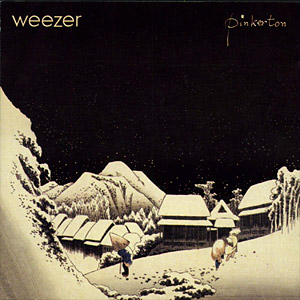 Pinkerton is an album close to the heart of many a
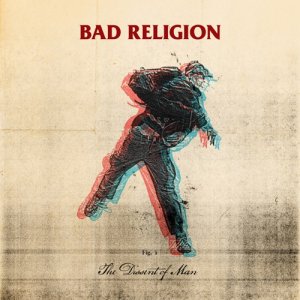 2010 saw SoCal veterans Bad Religion notch up a grand 30+ years in existence. That’s some legacy, and a plaque of honour in the Punk House of Fame is already long assured. They have also released their 15th studio album, containing fifteen new songs. Those with a keen ear will recognise ‘The Resist Stance’ from the free download live album released earlier this year, whilst an acoustic version of ‘Won’t Somebody’ was included in the deluxe version of their last album ‘New Maps of Hell’. And to be honest the blistering lead riffage of ‘Meeting of The Minds’ (one of the best tracks on here) has been recycled a fair few times over the years. Hey, I’m a big believer in the benefits of recycling to protect the planet and all that, but, you know…
 There is something about
  The name
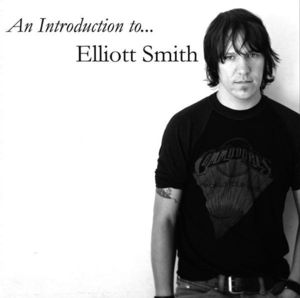 Seven years has passed since Elliott Smith’s untimely death (Suicide? Murder? Who knows…) and so it’s probably the perfect time to acquaint those too young to have appreciated him when he was around with the immense body of work Smith created. I’m sure there are also many who were aware of the singer/songwriter but never took the time to appreciate his work. Since Smith passed away, there have been two other major releases which undoubtedly held more interest for existing Elliott Smith fans than this latest one – ‘From A Basement on The Hill’ and ‘New Moon’. Those releases both included a hefty amount of previously unreleased material from the musical genius with ‘From A Basement…’ comprising much of the material that was intended for his next studio album. ‘An Introduction To…’ is more for those who never really had a chance to appreciate Elliott Smith’s music and need a good place to start. And a good place to start it is.
 On first appearances, the members of
 I remember sitting on the edge of a friend’s questionable and crusty bedspread watching a collection of exciting new scene videos around the time when higher production values didn’t necessarily mean higher costs or higher creativity, and asking the owner of these foul sheets the following question: “mate, are skate videos ruining Belle and Sebastian or are Belle and Sebastian ruining skate videos?” Thankfully, that question isn’t at all relevant now regardless of what the early PWBC episodes may suggest but one thing was for certain, the Scottish band then were becoming a little too twee and to an extent obvious and annoying. Many of us had grew up associating with their pure honesty and irreputably superb songwriting abilities reminiscent of that ‘golden’ era or whatever you want to call it, and to see them actually turn the volume down themselves and fade into clichés of clichés of clichés that even critics couldn’t keep up with was somewhat upsetting. So here we are, four years after their last album which had that shitty little frog song on it (ok, I like it, whatever, but it’s very silly), and with Write About Love it seems that the band have returned to their original maturity with such grace I feel bad for ever doubting them.